How often does a fireplace chimney need cleaning?
Your Neighbor's Air Care recommends cleaning a fireplace chimney twice a year. The first sweep comes before the
burning season, so the flue is clear and safe for the first fire. The second comes in spring, after the winter's
fires, so soot and creosote do not sit in a damp flue all summer, where they smell, attract moisture and harden.
The national fire code for chimneys, NFPA 211, sets the minimum: chimneys, fireplaces and vents inspected at least
once a year and cleaned whenever the inspection shows it is needed. Even a fireplace you light only a few times a
season needs that yearly look, because nests, leaves and fallen masonry block flues that
are hardly ever used. Your Neighbor's Air Care inspects the flue on every visit and will tell you if a sweep can
wait another year.
What is the best time of year to sweep a chimney?
Late summer or early autumn, before you light the first fire. Creosote is easiest to remove before a winter of
use has baked it on, and any blockage is found before you need the fireplace. There is a practical reason too:
across NYC and the Hudson Valley, chimney work crowds into a few weeks between late September and the end of
November. A call to Your Neighbor's Air Care in August or September gets you the day that suits you; the same call
in November usually means a wait.
Which signs mean the chimney needs cleaning now?
Do not wait for the calendar if you notice any of these:
- Smoke comes back into the room instead of going up the flue.
- The fire is hard to start or keeps dying down, a sign the draft is weak.
- A strong, smoky or tar-like smell from the fireplace, worse on hot or humid days.
- Black flakes or crumbs of soot falling into the firebox.
- Soot about 1/8 of an inch thick on the flue walls, roughly a coin's thickness. That is the point at
which the Chimney Safety Institute of America says a sweep is due.
- Shiny, tar-like glaze inside the flue. Glazed creosote is the most flammable kind.
- Birds, squirrels or a nest in the chimney, or debris landing on the damper.
Safety first. If you heard a loud rumbling or roaring from the chimney, or saw
flames or dense smoke from the top, you may have had a chimney fire. Do not light the fireplace again until the
flue has been checked.
Why does creosote build-up matter?
Every wood fire leaves creosote, a sticky by-product of smoke, on the inside of the flue. It builds up faster
with damp or unseasoned wood and with slow, smouldering fires. Creosote burns, so a thick layer is fuel for a
chimney fire, and a narrowed or blocked flue can push carbon monoxide back into the house. A yearly sweep removes
it before it becomes either problem. Burning dry, seasoned hardwood and keeping fires hot slows the build-up.
Do gas fireplaces and wood stoves need the same care?
Gas fireplaces burn cleaner, but their flues still need a yearly check for blockages, because a blocked gas
flue is a carbon monoxide risk. Wood stoves and pellet stoves often need cleaning more than once a season if they
are the main heat source in the house. Your Neighbor's Air Care cleans chimneys, fireplaces and wood stoves across
NYC, Westchester, Rockland, Putnam and Orange County.
What happens during a chimney sweep with Your Neighbor's Air Care?
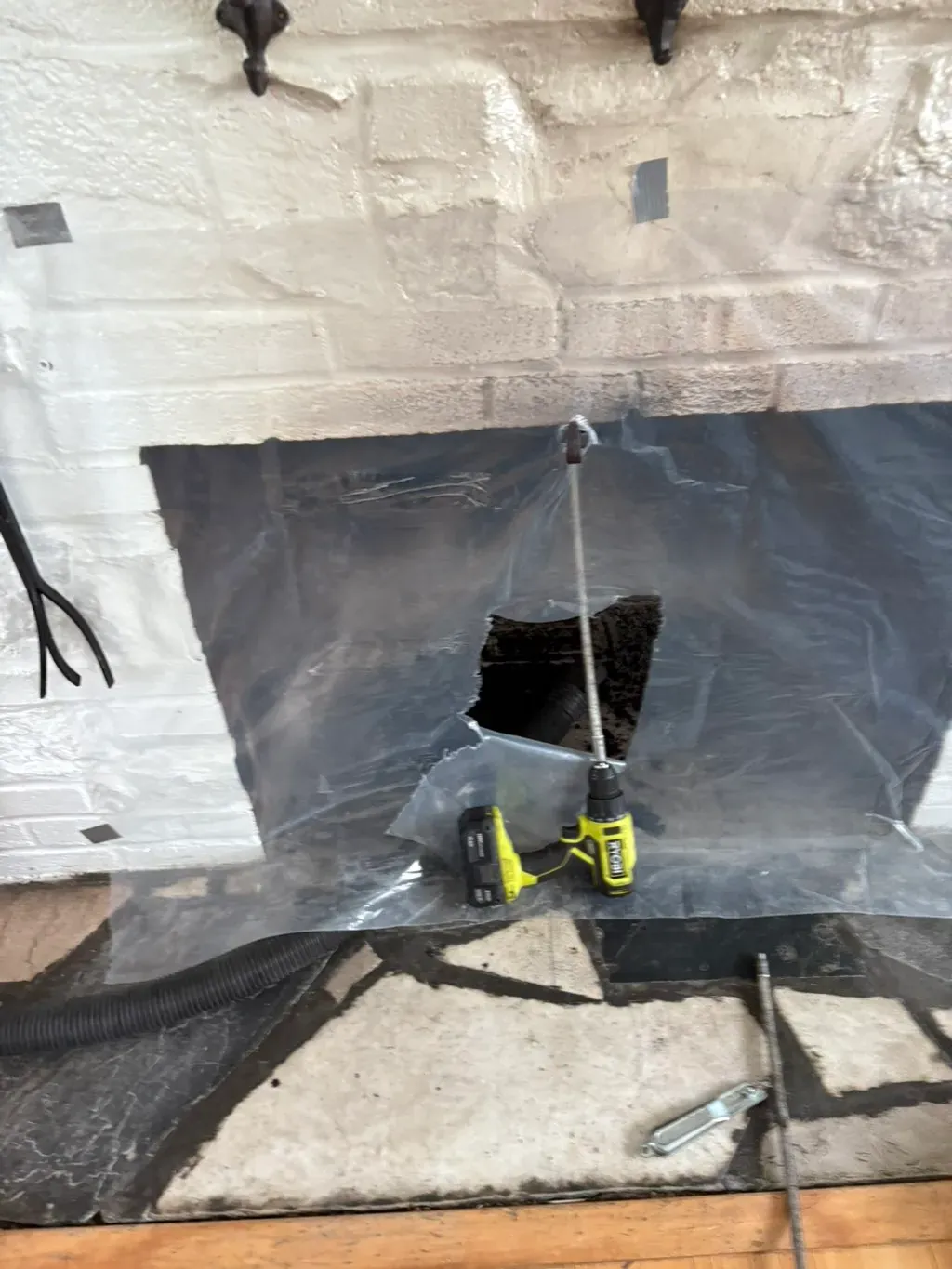
The crew protects the room, sweeps the flue from top to bottom with sealed equipment so soot stays out of the
house, clears the smoke chamber and firebox, and checks the flue with a camera. You get before and after photos
sent to your phone, so you can see what was done. The quote is free and agreed before any work starts. See the
full chimney sweeping service.
Common questions about chimney cleaning
How often should a fireplace chimney be cleaned?
Your Neighbor's Air Care recommends cleaning a fireplace chimney twice a year: once before the burning season, in late summer or early autumn, and once after it, in spring, to clear the winter's soot and creosote before it sits in a damp flue all summer. The national fire code for chimneys (NFPA 211) sets the minimum: an inspection at least once a year, with cleaning whenever it is needed.
What is the best time of year to clean a chimney?
Late summer or early autumn, before the first fire. In NYC and the Hudson Valley chimney work bunches into a few weeks between late September and the end of November, so a call in August or September gets you the day you want. Your Neighbor's Air Care books chimney sweeps seven days a week.
How much soot is too much in a chimney?
The Chimney Safety Institute of America uses a simple rule: if the soot and creosote on the flue walls is about 1/8 of an inch thick, roughly the thickness of a coin, the chimney is due for a sweep. Shiny, tar-like glazed creosote means it is due now, whatever the calendar says.
Do gas fireplaces need chimney cleaning too?
Yes, they need a yearly check. Gas burns cleaner than wood, but the flue can still be blocked by nests, leaves or debris, and a blocked gas flue can push carbon monoxide back into the house. Your Neighbor's Air Care checks and clears gas fireplace flues as well as wood-burning ones.
Can I clean my own chimney?
You can buy brushes and rods, but most homeowners cannot see the whole flue, cannot judge glazed creosote and end up pushing soot into the room. A professional sweep uses sealed equipment and a camera, so you know the job is done. Your Neighbor's Air Care sends you before and after photos of your flue.